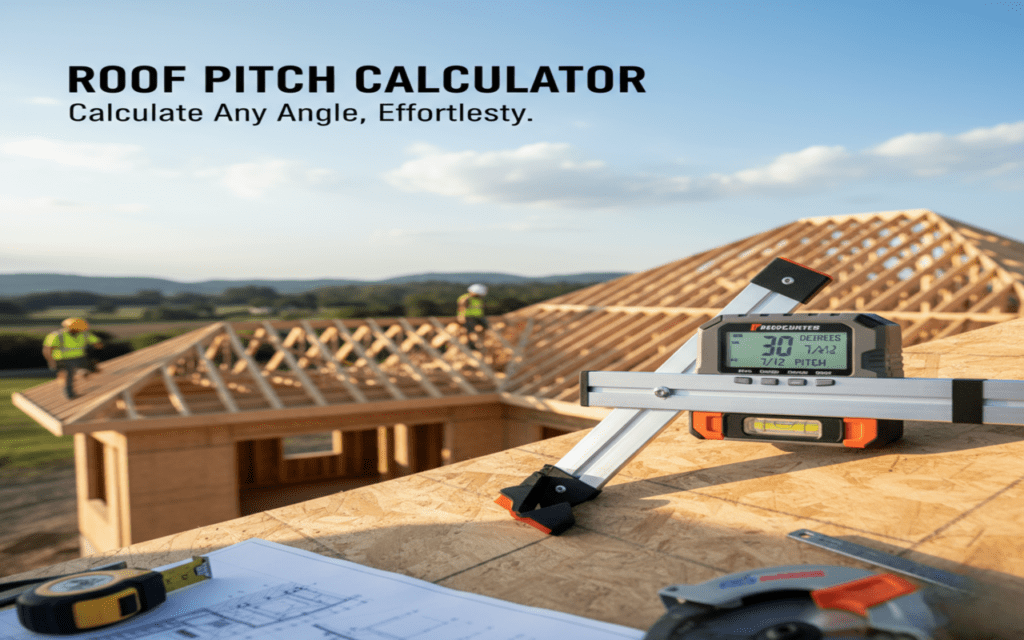
Understanding roof pitch is one of the most important steps for contractors, builders, and homeowners, especially with roofing projects. Roof pitch defines your roof slope; it will affect the amount of materials required, the safety of the structure and even the aesthetics of your home. This complete guide lays out everything you will want to know about how to use a roof pitch calculator, why you will want to use and how to get accurate results for your roofing project.
Table of Contents
What is Roof Pitch?
Roof pitch, or roof slope, indicates the steepness or angle of a roof. It is usually expressed as a ratio of rise/rise. For example, a roof that rises 4 inches for every horizontal 12 inches is said to be a 4/12 pitch.
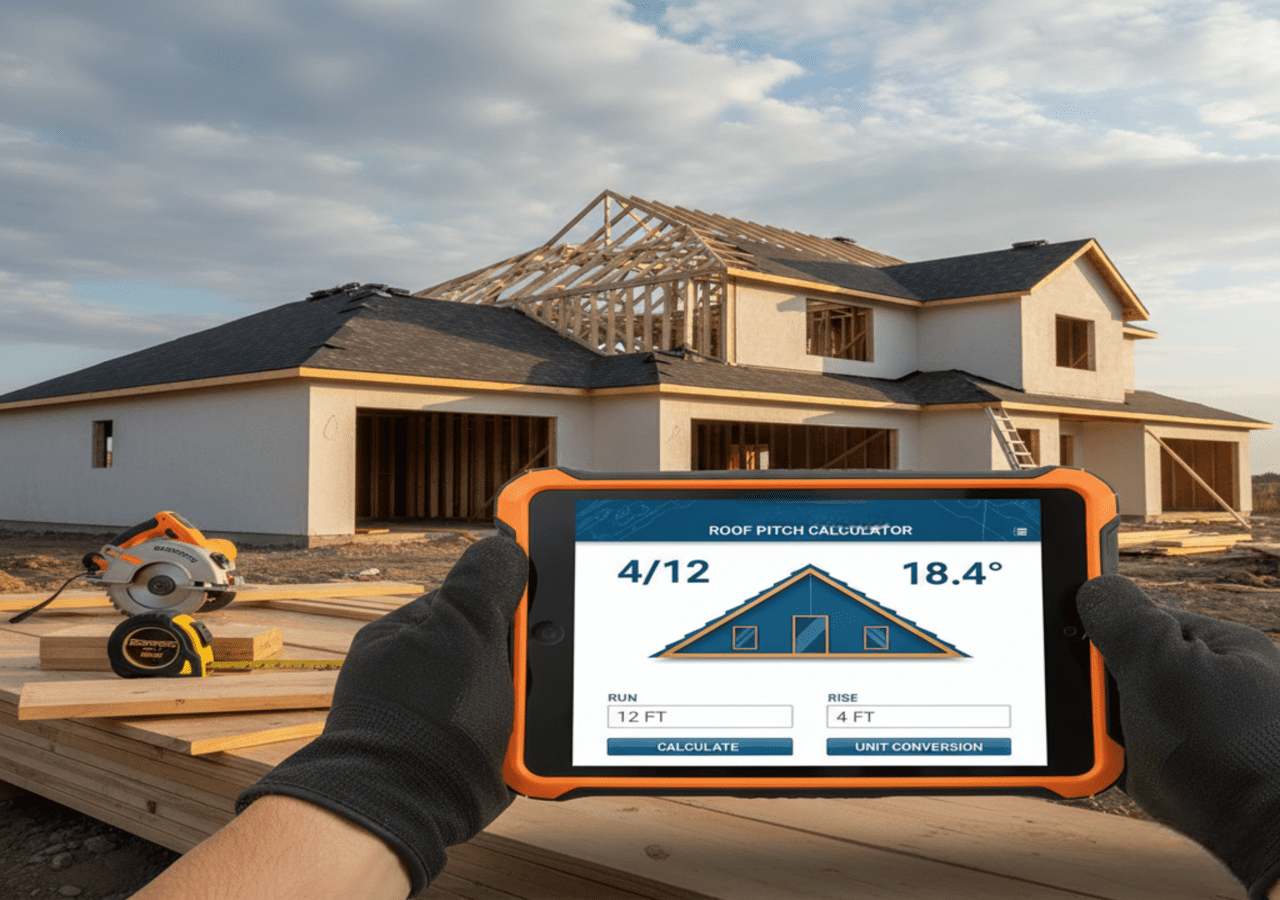
The greater the first number, the steeper the roof. This straightforward measurement is critical to your roofing project for several reasons:
- It determines the type and amount of roofing materials that are required
- It allows for drainage capacity for your roof
- It can impact the overall design and curb appeal of the structure
- And it impacts its structural integrity and weather resistance
Why Use a Roof Pitch Calculator?
A roof pitch calculator streamlines the complicated tasks of measuring roof angles and converting them into proper values. Rather than calculating the values by hand using tools and formulas, the calculator allows you to enter some data, and you will get immediate results.
Here are just some of the advantages of using a roof pitch calculator:
- Accuracy: A pitch calculator will not allow for any human error in calculations.
- Efficiency: A calculator will save time versus manual measures.
- Material Estimation: A calculator will help provide an exact number of shingles, tiles, or panels fit for the roof.
- Cost Planning: You will have an understanding of overall costs of the roof.
- Design: A calculator will assist in the estimate of gutter style or slope of roof selected for your project.
How to Calculate Roof Pitch Manually
Although calculators are efficient, knowing how to calculate the roof pitch manually is important. steps are as follows.
Step 1 – Measure the Rise: Use a level to measure the total inches the roof rises vertically.
Step 2 – Measure the run: Measure 12 inches horizontally across the roof base.
Step 3 – Calculate the Pitch Ratio: Divide the rise by the run. For example, the rise was 6 inches and the run was 12 inches: the pitch is 6/12.
Step 4 – If desired, convert it to an angle: use a scientific calculator to find the slope in degrees. The example of 6/12 would be approximately 26.5°.
Understanding Roof Pitch Ratios
The following are some common ratios of roof pitch and the descriptions they convey.
- Low Pitched Roofs (2/12 – 4/12):
Are great for more modern architecture. Easier to walk on, but may need special waterproofing to avoid leaks. - Medium Pitched Roofs (5/12 – 9/12):
Most popular residential roofing type. It is the best option for style, drainage, and material use. - Steep Pitched Roofs (10/12 and above):
Ideal in a heavy rainfall and/or snow area. Creates a greater curb appeal, but requires more materials and labor.
Roof Pitch Calculator Online – Step-by-Step Guide
It is easy to use a roof pitch calculator online. Here’s how:
- Open the Calculator: Go to your favorite roofing website which has a pitch calculator.
- Input Rise and Run: Input the rise (vertical height) and run (horizontal length).
- How to Use a Roof Pitch Calculator: The calculator will provide you with the pitch ratio and angle to know the pitch of your roof.
- Estimate Materials: The calculator may also provide a materials estimate if you like: shingles, tiles, or panels.
- Print or Save Results: The results will help you to estimate the costs for your project.
How Roof Pitch Affects Roofing Materials
The pitch of your roof directly dictates what roofing material is appropriate.
- Low Pitch Roofs – Use rolled roofing, single ply membranes, or metal panels to improve drainage on low pitch roofs.
- Medium Pitch Roofs – Asphalt shingle, wood shakes, and clay tiles are a perfect match for a medium pitch.
- Steep Pitch Roofs – Use slate, tile, and premium shingles to provide superior durability and custom design.
Using the roof pitch calculator will help you decide what material is best by showing the exact pitch requirement.
Impact of Roof Pitch on Cost
One of the frequently neglected aspects of roof slope is the effect it has on roofing prices.
Steeper Roofs = Higher Prices
- Because there is more surface to cover.
- Because the labor is increased due to the difficulty.
- Because of the increased safety equipment used.
Flatter Roofs = Lower Prices
- Its easier to install.
- There is less risk of falling.
- Less material is needed.
Using a roof slope calculator before your project will assist in better budgeting and help eliminate unexpected costs.
Roof Pitch in Architecture and Design
Aside from function, roof pitch is important to the aesthetics of your home:
- Modern homes will feature flatter pitches as part of a modern look.
- Traditional homes tend to feature medium to steep pitch roofs.
- Gothic or Victorian-ever the steepest pitch roofs help to create dramatic peaks.
Having the correct roof pitch adds value to your property as it not only contributes to the longevity of your roof but also adds curb appeal and market value.
Conclusion:
A roof pitch calculator is a helpful tool for contractors, homeowners, and architects alike. It eases the measurement process, increases accuracy, and ultimately leads to better materials, cost- and design-planning. By understanding the basics of roof pitch ratios and using online tools, along with accounting for how slope affects materials and costs, you can make better sourcing decisions about your roofing project and maximize your time and cost savings.
If you have a roof that needs replacing or are planning your next roofing project, begin using a roof pitch calculator to get the measurements and ultimately produce time savings for your next journey.
FAQs
1. Can I determine roof pitch without being on the roof?
Yes, a ladder, a level, and a tape measure at the edge of your roof will also suffice, or you may use aerial measurement services.
2. What is the highest pitch of a roof?
There is no technical, set limit. However, the majority of residential roofing pitches are kept below a 18/12 pitch for safety or logistical reasons.
3. Does roof pitch measure energy efficiencies?
Yes, steeper roof slopes may allow for better ventilation in the attic, while lower sloped roofs tend to be more practical for solar panel installations.
4. Can I use a roof pitch calculator with commercial roofs?
Of course, roof pitch calculators work for both residential and commercial roofing projects.