

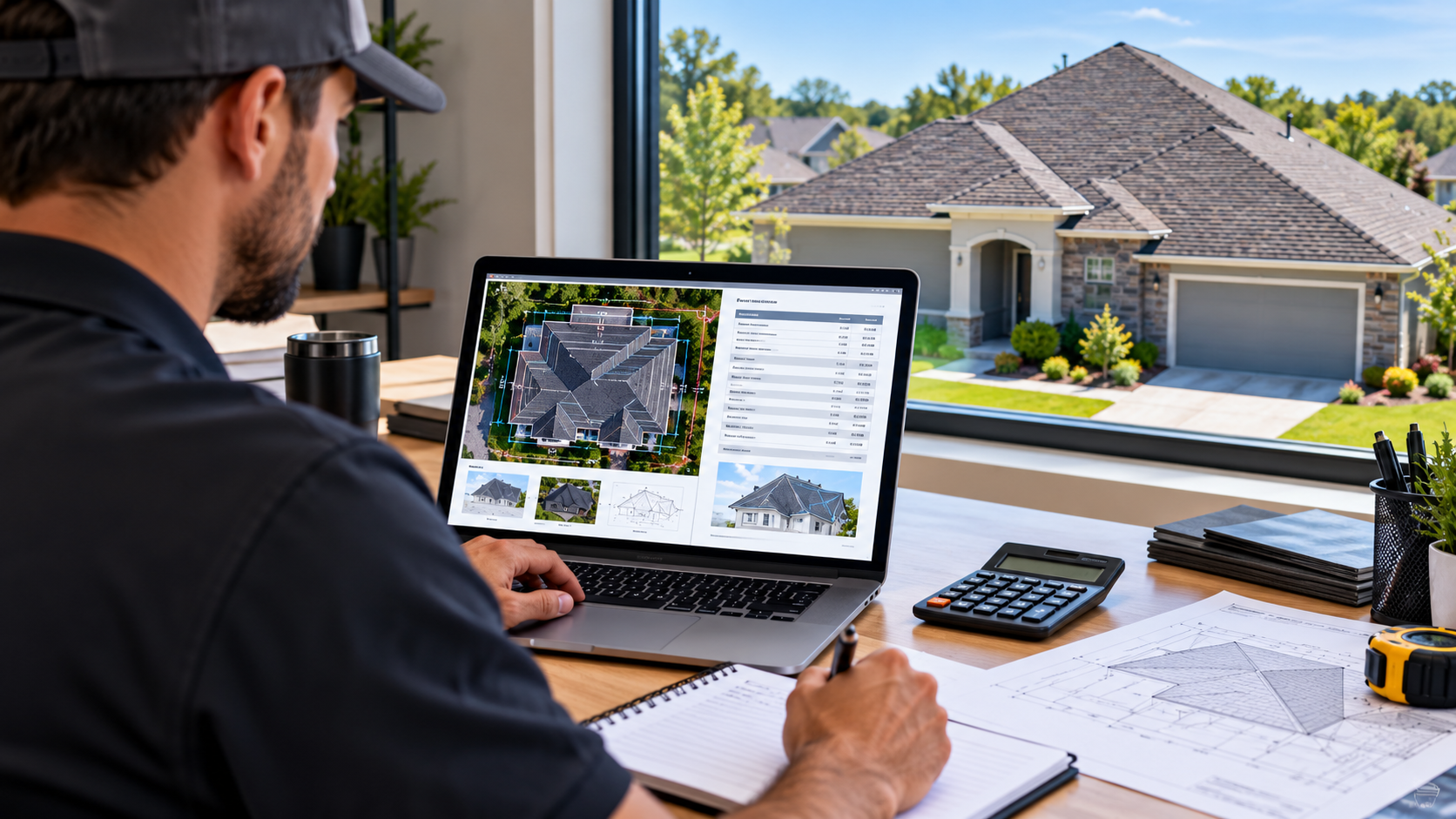
In today’s competitive roofing market across the USA, Canada, the UK, and Australia, speed can make a difference in winning new customers. Homeowners requesting a roof estimate may contact multiple contractors at the same time. The contractor who provides a clear, accurate, and professional estimate quickly can make a stronger first impression.
A well-organized roofing workflow helps contractors move from receiving a lead to preparing an estimate without unnecessary delays. Instead of spending hours arranging manual measurements and correcting calculations, contractors can use professional roof measurement reports to plan their next steps more efficiently.
Why a Faster Roofing Workflow Matters
Delays in preparing estimates can affect customer confidence and make it harder for roofing businesses to manage multiple inquiries. When contractors respond promptly and provide detailed proposals, customers can understand the scope of work and compare their options more easily.
A faster process does not mean sacrificing accuracy. Contractors need reliable roof dimensions, correct material calculations, and clear pricing before sending an estimate. Combining these steps into a consistent workflow helps teams save time while maintaining quality.
Step 1: Respond to the Roofing Lead Quickly
The first step is to acknowledge the customer’s inquiry and collect the information needed to prepare an estimate. This may include the property address, type of roofing project, known roof damage, preferred timeline, and any available property photographs.
A prompt response helps establish communication and allows contractors to understand the customer’s requirements. Organizing this information at the beginning also reduces repeated calls and unnecessary follow-up questions later in the process.
Step 2: Order an Accurate Roof Measurement Report
Manual roof measurements can take time to arrange and complete. Professional roof measurement reports provide contractors with essential information without requiring them to measure every roof section themselves.
Depending on the report, contractors can review roof area, pitch, ridges, hips, valleys, eaves, and individual roof sections. These details provide a useful foundation for calculating material quantities and preparing an estimate.
Using reliable roof measurement reports can help contractors move into the estimating stage sooner while reducing the effort involved in collecting roof dimensions manually.
Step 3: Review Measurements and Calculate Project Costs
Once the roof measurement report is available, contractors can use the measurements to calculate the estimated materials and labor required for the project.
This stage may include estimating shingles or other roofing materials, underlayment, flashing, labor, equipment, overhead, and profit margins. Appropriate material waste allowances should also be considered based on the roof design and installation requirements.
Contractors should review complex roof sections and pitch details before finalizing calculations. A quick review can help identify missing information and reduce the likelihood of sending an estimate that needs significant corrections.
Step 4: Prepare a Clear and Professional Estimate
A professional estimate should explain the proposed work and its expected costs in a way the customer can understand. A detailed proposal can include the project scope, material specifications, labor costs, pricing breakdown, and relevant terms.
Where appropriate, a roof diagram can help customers understand the property areas included in the estimate. Clear documentation also helps contractors answer questions and discuss any adjustments before the project begins.
A consistent estimating template can make this step easier, especially for businesses managing several customer inquiries each day.
Step 5: Send the Estimate and Follow Up
After reviewing the figures, contractors should send the estimate promptly and confirm that the customer has received it. If the customer needs clarification, the contractor can explain the measurements, material choices, and proposed work.
A structured follow-up process helps keep opportunities organized without overwhelming customers with repeated messages. Contractors can record when each estimate was sent, whether the customer responded, and what action is required next.
This process also helps roofing teams identify outstanding estimates and prioritize leads that need attention.
Common Roofing Workflow Mistakes That Delay Estimates
Even experienced contractors can lose time when their estimating process is not organized. Common problems include:
- Relying entirely on manual measurements when a suitable measurement report could save time.
- Missing roof sections or pitch details during calculations.
- Delaying estimates while waiting for information that could have been collected earlier.
- Sending unclear proposals without a proper breakdown of costs.
- Forgetting to follow up after an estimate has been delivered.
Addressing these problems helps create a more dependable roofing workflow and makes it easier to manage incoming leads.
How Roof Measurement Reports Improve the Roofing Workflow
Accurate roof measurement reports help contractors organize the estimating process around reliable property dimensions. Instead of spending excessive time collecting measurements, teams can focus on checking the report, calculating project costs, preparing the proposal, and communicating with the customer.
A consistent workflow also makes it easier to identify bottlenecks. Contractors can track how long each stage takes and determine whether measurement delays, material calculations, or customer communication are slowing the process.
The six-hour target should be treated as a workflow goal rather than a guaranteed turnaround for every project. Complex roofs, incomplete property information, and additional inspection requirements may require more time.
Conclusion
A faster roofing workflow combines prompt lead response, accurate roof measurement reports, efficient cost calculations, professional estimates, and timely follow-up. Each stage contributes to a more organized process and helps contractors respond to customer inquiries with greater confidence.
By reducing unnecessary delays and reviewing measurements carefully, roofing businesses can improve estimating efficiency, manage more opportunities, and provide customers with clearer proposals. The goal is not simply to send an estimate faster, but to deliver an accurate and professional estimate at the right time.
If you want to stay ahead and generate more conversions, start using reliable roof measurement services today.
Get fast and accurate reports here:- https://www.roofmeasuring.com


