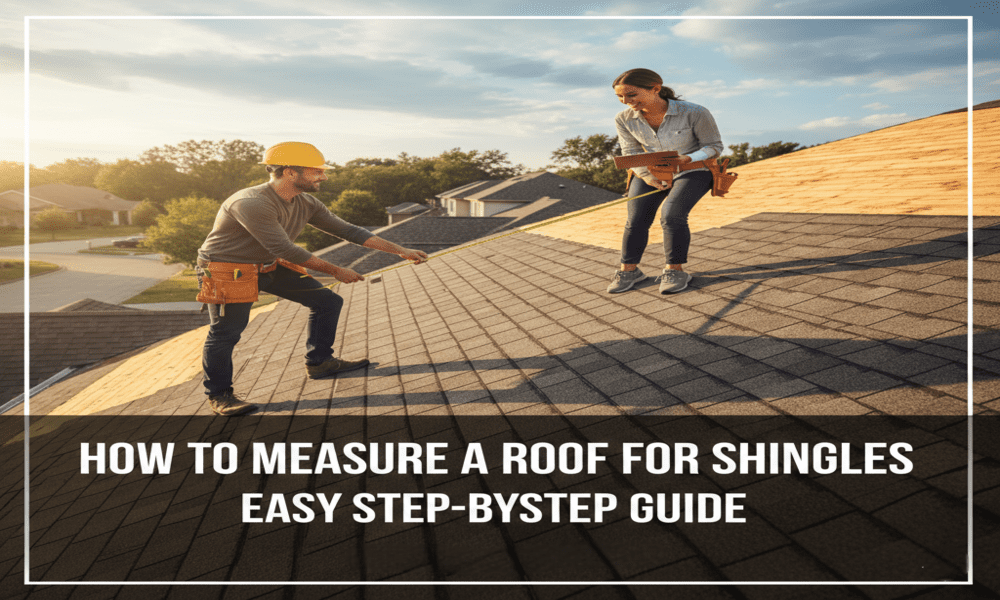
It’s very important to know how to measure a roof for shingles accurately, as it is essential for roofing contractors, estimators, and homeowners wanting to avoid a shortage of materials, too much waste, and delays in completing a job. A very small measuring mistake can result in huge overruns or reorders of your material.
This guide will show you step-by-step how to measure a roof for shingles properly, how many squares of roofing are needed, if there is a waste factor included and when it would be best for you to hire a professional to provide aerial measurements of your roof.
Table of Contents
Why Accurate Roof Measurement Matters
Understanding how to measure a roof for shingles accurately has a direct impact on the success of roofing jobs:
- Eliminate the chance of ordering too many or too few shingles.
- Minimize wasted materials and labor time.
- Provide accurate quotes to clients and their insurance companies.
- Present yourself as a professional contractor and provide accurate bids.
Additionally, Contractors who handle several projects will save hours of estimating by having an accurate roof measurement.
Tools Needed to Measure a Roof for Shingles
Before you begin learning how to measure a roof for shingles, make sure you have the right tools:
- Measuring tape
- Ladder & safety gear
- Pitch gauge/level/pitch level
- Calculator
- Paper/notepad/cloud app for roofing purposes
Professional roof measurement report (highly recommended for speed & accuracy)
Step-by-Step: How to Measure a Roof for Shingles
Step 1: Measuring Roofs by Length & Width
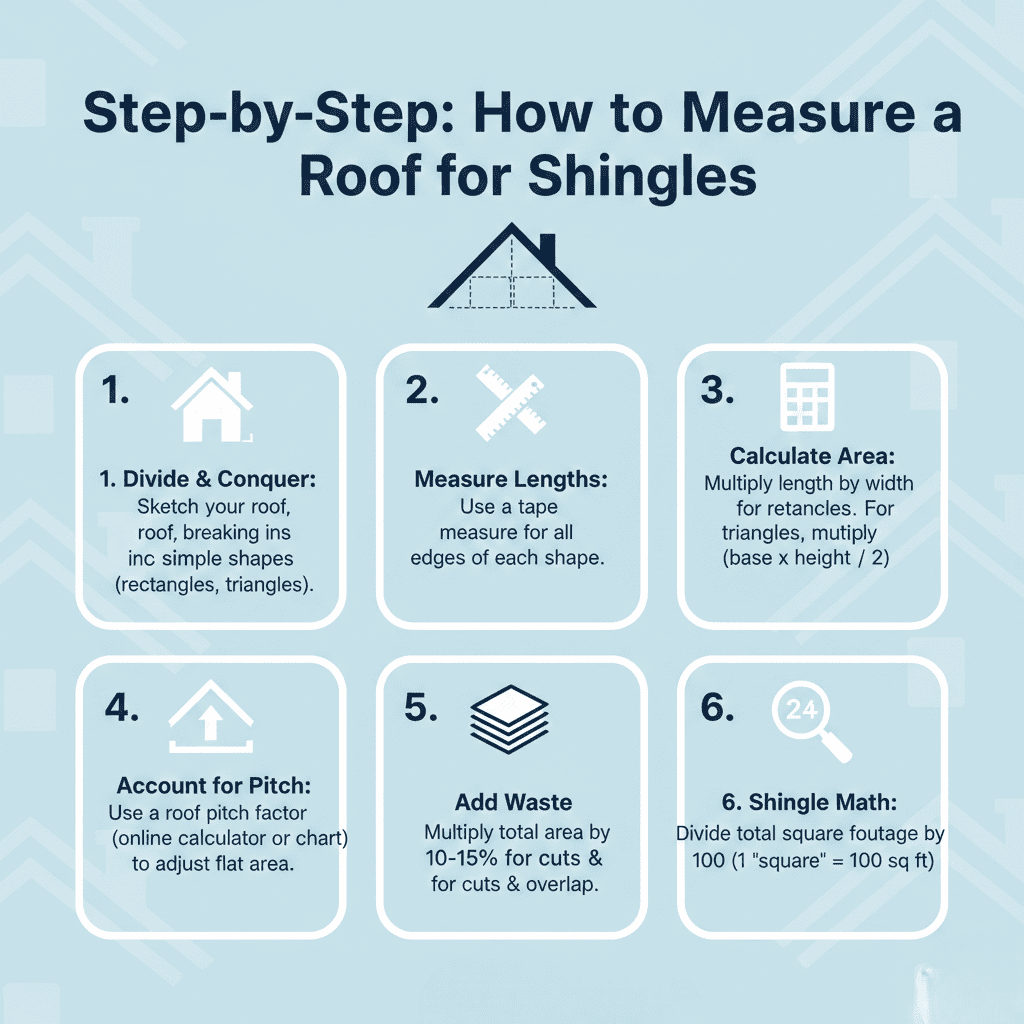
To start learning how to measure a roof for shingles, measure every flat roof section individually:
- Measure each flat roof area separately.
- Measure the area of the flat roof in both length and width.
- Record all measurements in feet.
- Include garages, dormers, and extensions
Step 2: Calculate Total Roof Area
Multiply length × width for each roof plane.
Example:
20 ft × 30 ft = 600 sq ft
Add all sections together to get total roof area.
Step 3: Finding Roof Pitch
Roof pitch determines surface area. When learning how to measure a roof for shingles, you must adjust for the roof’s slope:
- Pitch Gauge
- Rise over run (for example, a 6:12 pitch)
- Building Plans
If the roof has a high angle, you must apply the adjustments for the actual area to the pitch to calculate the actual area.
Step 4: Convert Square Feet to Roofing Squares
One roofing square = 100 square feet
Formula:
Total roof area ÷ 100 = roofing squares
Example:
2,000 sq ft ÷ 100 = 20 roofing squares
Step 5: Add Waste Factor
Always add waste to account for cuts and errors.
- Simple roofs: 10% waste
- Complex roofs: 12–15% waste
Example:
20 squares + 10% = 22 squares needed
Including the waste factor is crucial when you want to know how to measure a roof for shingles that accounts for cuts, ridges, and hips
What Is a Roofing Square?
A roofing square is the standard unit used by professionals when learning how to measure a roof for shingles
- One square of roofing is equal to one hundred square feet.
- Most shingles are packaged in three (3) bundles per square.
- There are some architectural shingles, however, that require four (4) bundles per square.
Knowing how roofing squares work is essential for ordering the proper quantities of materials.
Manual vs Aerial Roof Measurement
| Method | Accuracy | Time | Safety |
|---|---|---|---|
| Manual Measurement | Medium | Slow | Risky |
| Aerial Roof Measurement | High | Fast | Safe |
Using manual measuring methods can take longer and create hazards, particularly on steep or deteriorated roofs. Aerial roof measurement services provide precise measurements from the air and eliminate the need for a site visit to measure.
👉 Aerial reports allow contractors to provide an estimate quicker and close more jobs.
How Many Shingles Do You Need?
To calculate shingle quantity:
- Determine total roofing squares
- Multiply by bundles per square
- Add extra bundles for ridge caps and starters
Example:
22 squares × 3 bundles = 66 bundles
Always confirm manufacturer specifications.
Common Roof Measuring Mistakes to Avoid
When learning how to measure a roof for shingles, watch out for these common errors:
- Forgetting roof pitch adjustment
- Ignoring valleys, hips, and ridges
- Skipping waste factor
- Miscounting roof sections
- Relying only on ground estimates
Avoiding these mistakes protects your margins.
Pro Tip: Skip Manual Measuring
Roofing contractors can benefit from the speed of receiving accurate roof measurement reports within a timeframe of 8 hours for a low price point of $12.
With an aerial measurement report, you will receive:
- Accurate measurements
- Pitch, area and length
- No need to climb or visit the roof
- Faster estimates and approvals
✅ Order a Roof Measurement Report
✅ View Sample Roofing Report
FAQs
1. How do you calculate shingles for a roof?
Measure total roof area, convert to roofing squares, add waste factor, then multiply by bundles per square.
2. How many square feet is one roofing square?
A roofing square is equal to 100 square feet.
3. What waste factor should I use for shingles?
For simple roof designs, use a waste factor of 10% or for complex roofs a waste factor of 12% to 15%.
4. Is the aerial roof measurement accurate?
Yes. Contractors, insurers and adjusters use this method extensively and rely on the accuracy of the data.
Conclusion
Measuring a roof for shingles accurately and readily will help contractors lower waste, create better estimates, and become more profitable. Contractors used to measure roofs manually, but the new normal for contractors is to utilize an aerial roof measurement report as a means to obtain measurements quickly and safely with precision.
If you want accurate results without climbing a roof, roofmeasuring.com provides fast, reliable roof measurement reports trusted by contractors across the industry.