In North America, a 4/12 roof pitch is a common choice for both Residential and Commercial roofing systems, as well as being one of the most frequently searched roof slopes. At RoofMeasuring.com, our goal is to give contractors, homeowners, and insurance professionals the information they require to clearly understand how the geometry of their roofs affects their overall performance, so we provide data-driven, accurate calculations for all the angles, degrees, measurements, material suitability, drainage performance, and calculation methods necessary to completely understand a 4/12 roof pitch.
Table of Contents
What Does 4/12 Roof Pitch Mean?
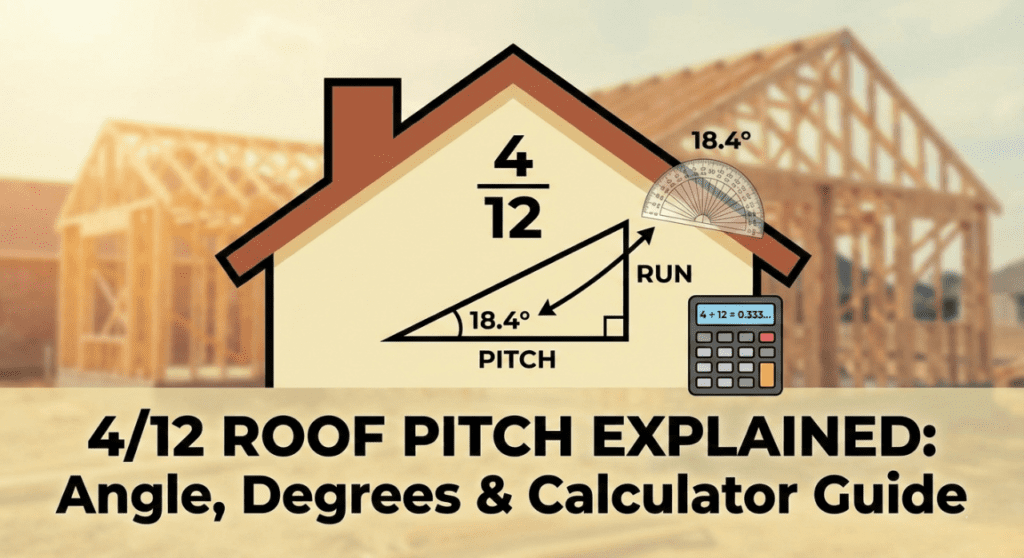
Rising 4 inches for every 12 inches of run, the angle of a 4:12 assumes the ratio of slope or incline. This is an important consideration for draining away any precipitation that falls onto the roof, as well as for selecting roof materials and estimating the labor associated with the installation of the roofing material, and executing an accurate takeoff of materials.
The 4:12 roof pitch also represents the average roof pitch of residential homes. This is a good compromise between flat roofs and pitched roofs; flat roofs tend to allow large accumulations of water and snow to build up, while being too steep would make it difficult for a worker to safely access the rooftop. In addition, a 4:12 roofing angle can be easily accessed by workers and inspectors, making this type of roofing the preferred choice for homes built in areas receiving moderate amounts of rainfall.
4/12 Roof Pitch Angle in Degrees
For roof calculations and design associated with engineering, solar panel placement, etc., knowing the angle of a roof in degrees is very important.
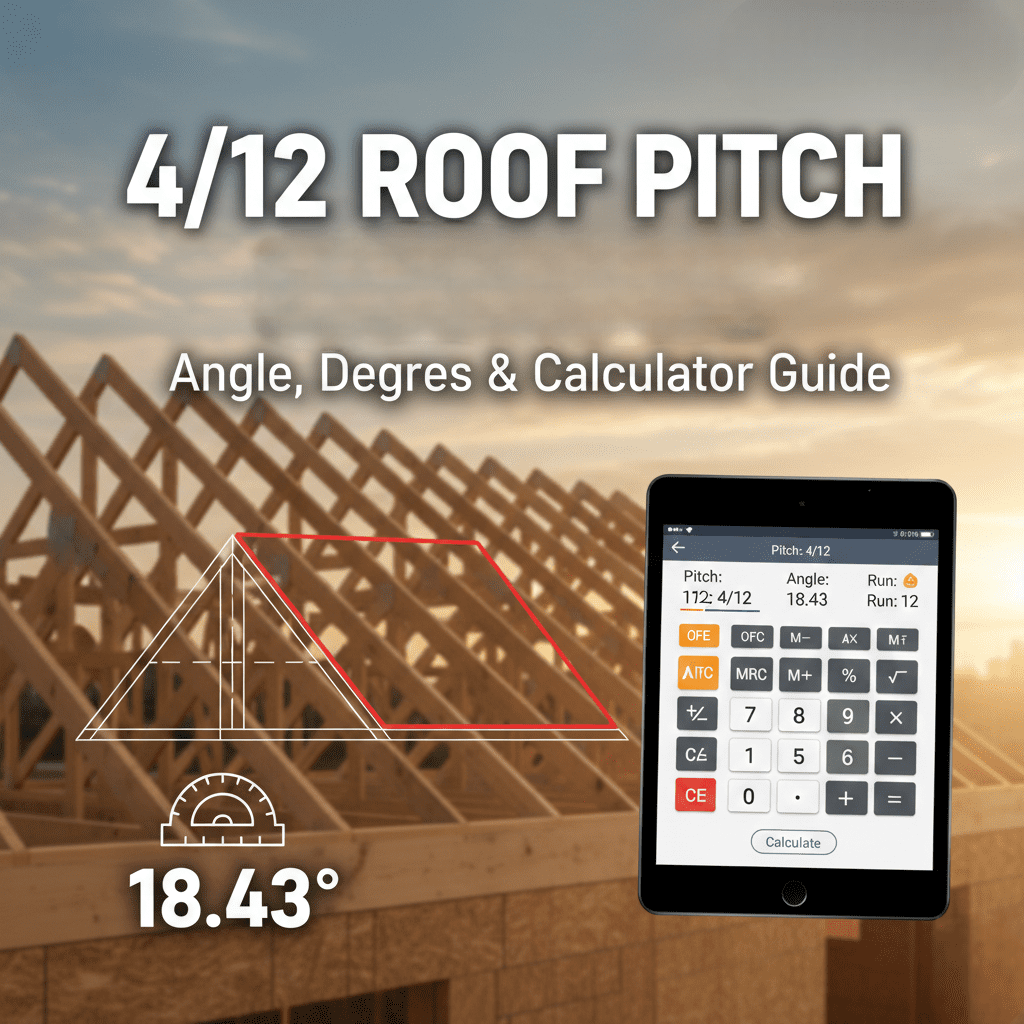
- Roof/Land Pitch Angle (4/12): 18.43 degrees
- Slope (%): 33.33%
- Ratio of Pitch: 4:12.
A roof with this angle is classed as having a low to moderate slope and therefore is well suited for various types of roofing materials and styles.
How to Calculate a 4/12 Roof Pitch
To ensure the right materials are ordered when installing roofing, materials are not wasted, and the proper codes are followed, it is important that the roof pitch is calculated accurately. There are three methods utilized by professionals to calculate.
Manual Measurement Method
- Take a horizontal measurement from the roof (12 inches).
- Then measure straight vertical (the rise) from that point.
- Once completed if you get a measurement of 4 inches, then your roof pitch equals 4/12.
Angle-Based Formula
- The Formula Angles of Roofs.
- Angle = arctan (rise/run); where rise = 4 and run = 12.
- Therefore, your answer is 18.43 degrees.
Online Roof Pitch Calculator
- Pitch Ratio
- Roof Angle
- Surface Area
- Quantity of Materials
Roofmeasuring.com uses advanced aerial measurement technology to derive the pitch of a roof with industry-standard accuracy.
Why the 4/12 Roof Pitch Is So Popular
Builders and homeowners have selected the 4/12 Roof Pitch because of the structural and economical advantages it offers.
Balanced Drainage Performance
The 4:12 roof slope will effectively redirect the flow of rainwater and melted snow directly to the gutters without allowing the accumulation of water or the leaking of rainwater into the home.
Lower Installation Costs
Inaddition, it offers builders a much lower overall price when building a new home than a steeper sloped roof pitch: fewer pieces of safety equipment are needed, the labour is completed sooner, and the builder has cheaper installation costs.
Broad Range of Compatibility With Roofing Materials
The 4/12 Pitch accommodates the following types of Roof Materials: Metal, Wood, Asphalt, Tile and Shingle. As a result, it accommodates various budget levels and many different climates.
Best Roofing Materials for a 4/12 Roof Pitch

It’s important to choose the correct material to meet warranty requirements and ensure maximum durability. 4/12 roof slopes are sufficient to meet the majority of standard roofing requirements for these products.
Asphalt Shingles
- Lowest recommended slope – 4/12
- Cost effective and simple to install
- High performing for all residential applications.
Metal Roofing
- Exceptional durability with standing seam metal roofing products.
- Exceptional performance with standing seam systems at moderate roof slope applications.
- Metal roofing systems provide long life and will provide maximum energy savings.
Architectural Shingles
- Improved performance during severe wind events.
- Greater aesthetics with architectural shingles.
- Architectural shingles may be installed on roofs with a 4/12 pitch.
Synthetic Roofing Products
- Lightweight products that have long service life.
- Designed for use on moderate slope roofs.
- Excellent performance with weather conditions.
4/12 Roof Pitch vs Other Common Roof Pitches
Understanding how it compares to other slopes helps in design and budgeting decisions.
| Roof Pitch | Angle (Degrees) | Walkability | Drainage |
|---|---|---|---|
| 3/12 | 14.04° | Very High | Moderate |
| 4/12 | 18.43° | High | Good |
| 6/12 | 26.57° | Moderate | Excellent |
| 8/12 | 33.69° | Low | Very High |
The 4/12 pitch sits at the optimal midpoint, offering reliability without complexity.
Is a 4/12 Roof Pitch Walkable?
Working on roofs with a 4:12 pitch is doable by those who have received proper training and have the ability to use regular work shoes and basic safety harnesses when doing roof work, thereby increasing efficiency and safety during installation.
Snow Load and Weather Performance
Roof slopes help with snow melt-off in cold areas.
- A 4/12 slope gradually removes snow from the roof as it melts.
- When used in conjunction with proper insulation, it helps reduce ice dams.
- This slope performs well in a variety of weather patterns.
When coupled with professional design and ventilation, this roof slope will provide many years of structural integrity.
Why Accurate Roof Pitch Measurement Matters
Inaccurate roof pitch information can lead to;
- Material shortages or excess waste
- Improper design of drain systems
- Warranty voids, and
- Structural miscalculations.
At roofmeasuring.com, we deliver accurate roof pitch measurements using aerial imagery and advanced calculation tools, eliminating guesswork and improving project outcomes.
Professional Roof Pitch Reports for Contractors
For estimates, claims, and compliance, Insurance Professionals and Roofing Contractors depend on accurate pitch data. A verified 4/12 pitch roof report will provide you with:
- More quickly approved jobs
- More accurate bids
- Fewer site visits
- More revenue.
Our Measurement Reports are obtained quickly and accurately, and are used throughout Canada and the United States.
Final Thoughts
The 4/12 roof pitch has proven to be one of the most flexible, economical, and functional roof slopes utilized in today’s construction. With a slope of approximately 18.43 degrees, it provides compatibility of materials, reliable weathering performance and long-term value for both homeowners and contractors.
Having a solid understanding of how to accurately measure the roof pitch will greatly contribute to the success of any roofing project. When combined with professional-grade measuring devices and skillful analysis, it will give architects, builders and estimators an advantage in roof design/installation/estimation.
FAQs
1. What does a 4/12 roof pitch mean?
A slope of 4:12 indicates that the roof will rise 4 inches for every 12 inches of horizontal distance travelled on the roof. This slope is classified as moderate and is commonly used in construction.
2. What is the angle of a 4/12 roof pitch?
A 4:12 slope will have an angle of 18.43°, which is appropriate for all types of residential type roofing systems.
3. Is a 4/12 roof pitch good for asphalt shingles?
Yes, 4:12 is the minimum slope recommended for asphalt based roofing products and provides excellent long term performance of asphalt product installations.
4. Can you walk on a 4/12 roof pitch safely?
A 4:12 pitch is classified as being walkable by a qualified roofing professional who is wearing the correct fall protection equipment.
5. Is a 4/12 roof pitch good for snow and rain?
Yes, a 4:12 pitch will provide proper drainage for both rain and snow and will reduce the potential for roof leaks and/or ice accumulation when the roof is installed correctly.