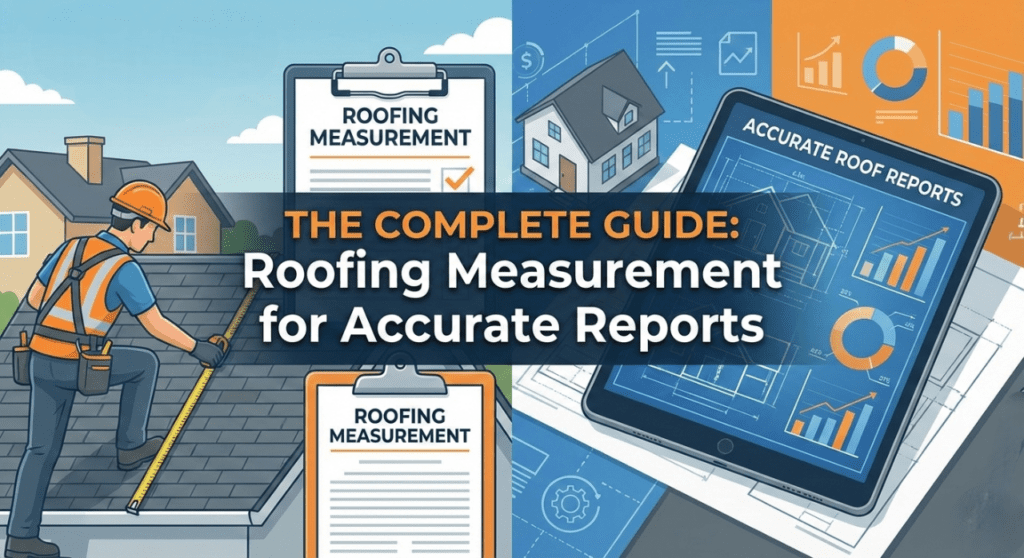
Accurate roofing measurement are essential. Whether you are a property owner getting ready for a roof job, a contractor budgeting the project, or a claims adjuster assessing an insurance claim, getting the measurement right for a roof is important for efficiency and cost control. This article will provide you with an overview of roofing measurement from conventional measurement methods to being able to measure your roof using aerial technology with the goal of measuring every square foot of your roof accurately.
Table of Contents
What Is Roofing Measurement?
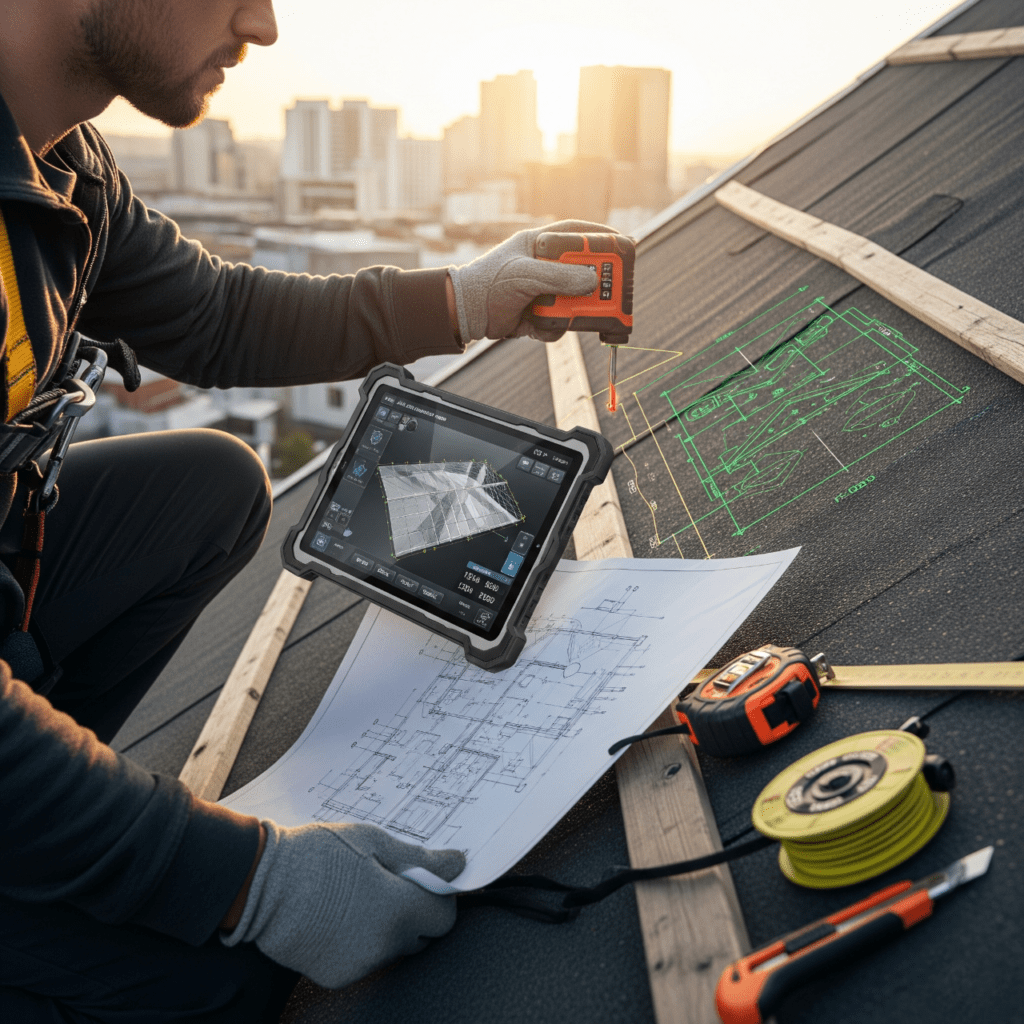
These measurement refers to the calculation of a roof’s surface area to know how much material will need to be purchased, labor to be planned, and what the project contains overall. Roof measurements are usually stated in “squares”. One roofing square is equal to one hundred square feet.
These measurements can allow or restrict the overall material purchase, which in turn will impact the project timeline and the amount of dollars spent overall. Even small measuring errors can lead to wasted or needless material, excess costs, and project delays.
Traditional Roofing Measurement Methods
Prior to development of sophisticated systems, roofers adhered to the manual methods of measurement.
Measuring Manually
Roofers would utilize a tape measure to traverse onto the roof, measure the length and width of each plane, where they multiply these numbers to calculate square footage.
Using Roof Pitch Multiplier
Roof pitch, the angle and/or slope of the roof, must also be accounted for in calculating flat surface measurement. The steeper the pitch, the larger the surface area. Roofers utilize pitch multipliers from standard pitch charts to account for this accurately.
Using Blueprints to Estimate Calculations
Contractors may also have used architectural blueprints or drawings to determine and or estimate dimensions without climbing onto the roof.
While these methods have worked, they take longer, are labor-intensive, and carry risks due to safety.
Modern Roofing Measurement Solutions
Roof measurement has changed significantly because of technology. Today, contractors, insurers, and homeowners all depend on digital roof measurement as it is faster, safer, and more accurate.
- Aerial Roof Measurement
Using satellite mapping, drones, or aerial photography, precision takes place through obtaining roof measurements to figure roof dimensions. It eliminates taking measurements manually, thus reducing chances of human error.
- Drone Roof Measurement
When someone chooses the drone roof measurement, drones equipped with high-definition cameras take pictures of the roof that can cover multiple angles. The software then produces a 3D model of the roof area revealed from the images that includes exact area (height, etc.), slopes, and roof dimensions.
- Roofing Measurement Software
Many roofing software and platforms enable users to upload pictures or blueprints, allowing them to create roof reports automatically.
Why Accurate Roofing Measurement Matters
Cost Efficiency
Excessively ordering materials wastes money and ordering too little will result in delays. Accurate measurements allows an efficient amount of materials – shingles, nails, and underlayment.
Better Project Scheduling
Roofing contractors will be able to provide firm timelines and quotes, so customers can feel comfortable with the project.
Safer Worksites
If workers use aerial and drone technology, they will be off and on roofs much less. A significant cause of injury in roofing installation comes from climbing and traversing roofs.
Claim Settlement with Insurance
Insurance companies want to receive correct reports regarding roofs to properly assess potential damage and settle insurance claims.
Step-by-Step Process
- Identifying Roof Planes
Break the roof down into rectangles, triangles and trapezoids. - Measuring Dimensions
Record lengths and widths of each plane. - Checking Roof Pitch
Apply pitch multiplier based on slope. - Calculate Square Feet
Sum total area and divide by 100 to get total “squares.” - Consider Waste
Add 10%-15% extra for cutting pieces, overlaps, and mistakes.
Tools for Roofing Measurement
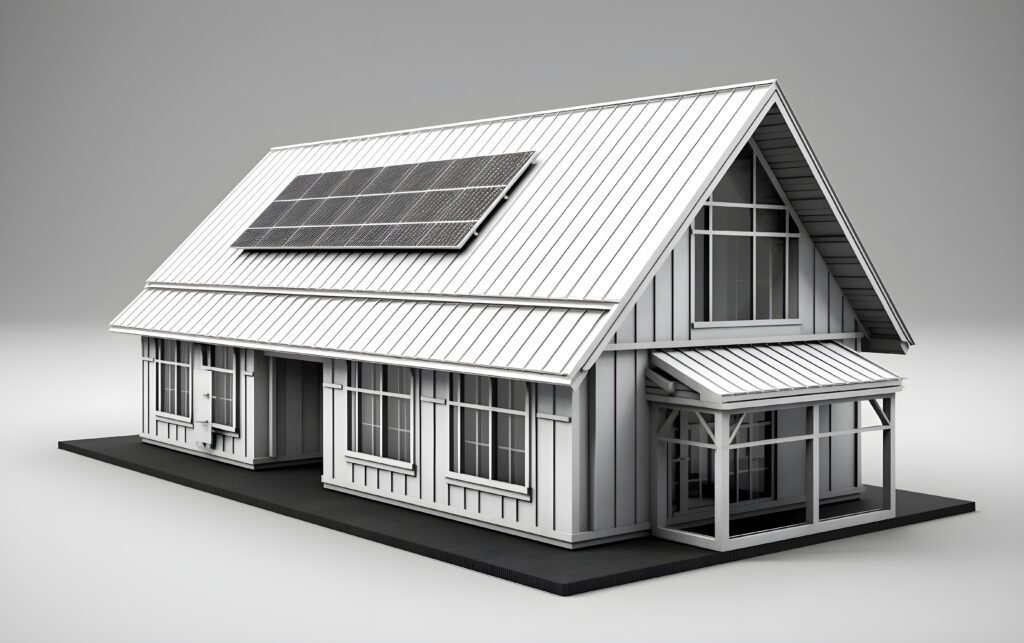
- Tape Measure & Ladder (traditional approach)
- Laser Measuring Device for precision
- Pitch Gauge for slope calculations
- Roofing Software & Apps for automated results
Roofing Measurement Best Practices
- When ordering material, always double check measurements.
- Use any software programs or aerial tools to help with complicated roof geometries.
- Make sure to consider any special roof features like chimneys, skylights, dormers, and vents.
- Add a waste factor to measurements to account for mistakes to not have to run short.
- Keep roof reports up to date for insurance or maintenance records.
Conclusion
Comparatively small to other trades, correctly measuring a roof is fundamental to every roofing job. Cost-saving on materials, the safety and efficiency of manpower, and quality, having reliable and precise measurements, creates clarity. There is no shortage of methods now being used for roof measurement, with aerial imaging, drone mapping, and software being some of the examples that the homeowner and roofing contractor have access to with confidence and accuracy.
(FAQs)
Q1: How to get the measurement of a roof?
Break the roof down into simple shapes, measure the dimensions, add for pitch, and add up the total square footage. Divide that total by 100 to get total squares of roofing.
Q2: What is the easiest way to measure a roof?
The easiest and most accurate way is with an online aerial roof measurement reports
Q3: How accurate is an aerial roof report?
The best highest quality reports can be accurate within 2%-3%, which makes them very dependable for project planning.
Q4: Do I need to get on the roof to do the measuring?
Not necessarily. With aerial reports you can measure roofs remote with satellite, aerial photos or use drone technology.
Q5: How much extra material should I get?
You should always add 10%-15% in waste factor to allow for trimming, overlap and mistakes.
Q6: Can a homeowner measure their own roof?
Yes, homeowner can measure their own roof, but with caution. The professional report will be more safer and accurate.
Q7: What is a roofing square?
One roofing square covers 100 square feet of roofing material.