
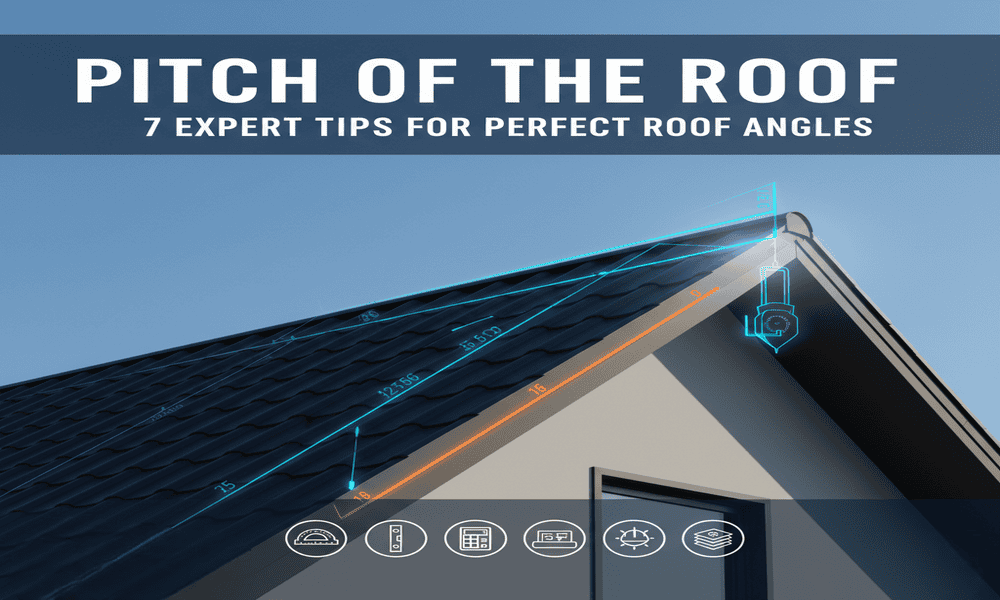
The pitch of the roof is one of the most important factors regarding roofing that can influence the strength of the structure, the aesthetics, and resistance to weather. The roof pitch, which is measured as the vertical rise to horizontal run, affects everything about the roof including drainage, durability, the materials that are used, and the overall look of your home or commercial structure.
In this guide on roof pitch, seven tips for homeowners, builders, and roofing professionals to attain the best possible pitch of roof angles that are effective for roofing performance and design will be offered.
Table of Contents
7 Expert Tips:-
1. Understand What the Pitch of the Roof Really Means
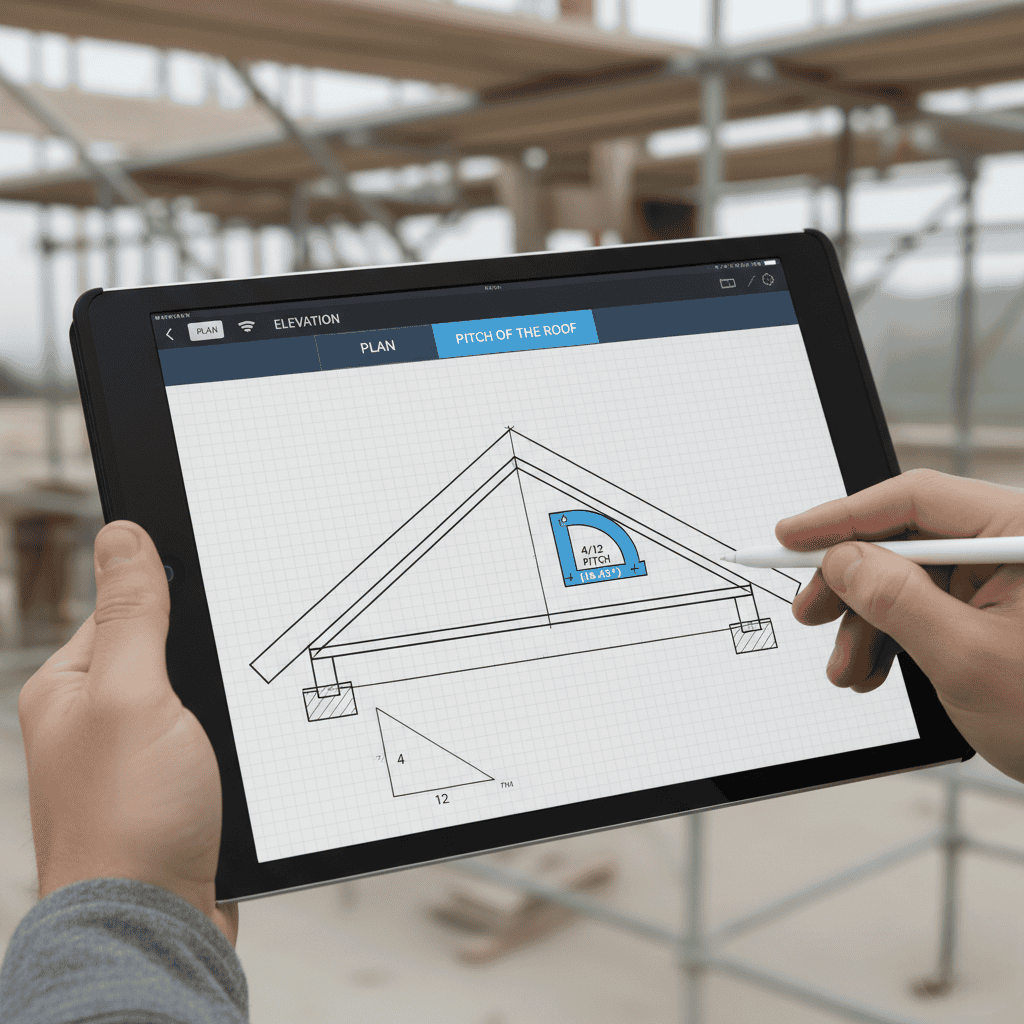
The steepness or flatness of your roof is determined by the pitch, which is most commonly expressed as a ratio, for example, 4:12 means the roof rises 4 inches for every 12 inches of horizontal run.
A low-slope roof (below 4:12 pitch, typically) is more appropriate for contemporary architecture and commercial buildings. Steeper roofs (over 6:12 pitch, typically) are more traditional and more effective at shedding water, snow, and ice.
Understanding your roof pitch will help you determine:
- What roofing materials will be suitable (for example, asphalt shingles, metal panels, slate, or membrane roofing)
- How efficiently water will drain from the roof, particularly in climates that receive more rainfall or snow.
- The overall appearance, and curb appeal, of your home.
2. Measure the Pitch of the Roof Accurately
Measuring the angle of the roof accurately means that you will have the right materials and comply with local building codes.
There are a number of ways to measure the pitch of the roof :
- Level and tape measure – Lay the level on the roof surface and then measure the rise over a distance of 12 inches horizontal.
- Digital – Roofing software and pitch finders allow you to get a precise measurement from either aerial imagery or from the roof, producing accurate results.
- Apps – There are several apps that can calculate slope instantly, by simply using your phone’s camera.
Pro tip – Measure from multiple locations to ensure equal pitch across the roof line.
3. Choose the Ideal Roof Pitch for Your Climate
The correct angle of your roof is mainly a function of the climate zone you live in. For instance you will generally want to consider:
- Snowy areas – A steeper roof (8:12 or more) allows snow to slide off easily, prevents ice dams and reduces structural stress and loading.
- Rainy areas – A moderate slope (4:12–6:12) allows for good drainage, but stays balanced.
- Hot areas – The flatter roofs and reflective coatings are ideal to minimize heat gain and improve energy efficiency.
By considering the pitch of the roof in relation to your climate, you will increase durability, efficiency, and comfort.
4. Align Roof Pitch with Architectural Style
Every architectural style has a characteristic roof slope. Choosing the right pitch of the roof preserves the design’s integrity and adds aesthetic harmony.
| Architectural Style | Recommended Roof Pitch |
|---|---|
| Modern/Contemporary | 1:12 – 3:12 |
| Colonial | 6:12 – 9:12 |
| Craftsman | 4:12 – 6:12 |
| Gothic or Victorian | 9:12 – 12:12 |
| Ranch | 3:12 – 5:12 |
Selecting the appropriate slope ensures your roof complements your building’s proportions and enhances visual appeal.
5. Factor in Roofing Material Requirements
Different roof coverings of roofing materials have different pitch of the roof ranges within which they will operate properly. Choosing the wrong material is the wrong pitch can lead to leaks, shortened life expectancy, and voided warranties.
Here is a summary:
- Asphalt shingles, minimum pitch of 2:12; recommended pitch of 4:12 or greater.
- Metal roofing, capable of being applied to low slopes or steep slopes (equal to or greater than a pitch of 1:12).
- Clay or concrete tiles, requiring a minimum slope of 4:12.
- Rolled roofing or EPDM membranes, best suited for low-slope/flat roofs.
If you are unsure, check the manufacturer’s installation instructions for the materials you are using to match the pitch and materials perfectly.
6. Optimise Roof Pitch for Energy Efficiency
The roof’s angle not only affects appearance and drainage but is also a major consideration in energy efficiency.
A properly determined roof pitch can:
- Optimize the amount of exposure for solar panels, if they face south in the Northern Hemisphere.
- Increase airflow and ventilation in the attic which minimizes the buildup of heat in summer months.
- Reduce energy loss in the winter by keeping insulation thickness relatively uniform.
Energy-efficient houses benefit even more from the right pitch of the roof combined with optimal insulation, radiant barriers, and ventilation systems. These elements can drastically reduce your utility bills as well.
7. Calculate Roof Pitch for Aesthetic and Functional Balance
Determining the ideal ratio for roof pitch comes down to managing function and aesthetics.
A very low pitched roof may look heavy, and the drainage may be compromised. A very steep roof could overpower the proportions of a smaller structure.
You want to:
- Proportion the pitch to the width and height of the building.
- Facilitate runoff as needed for the site.
- Enjoy a pleasant silhouette that works with the design of the structure.
This is achieved by employing some sort of software calculation tool, or an estimation service from professionals that simulates how the various roof angles will look and act.
Bonus Tip: Use Professional Roof Measurement Reports
When exactness is required and highly valued for roofing contractors or designers, it’s advisable to utilize aerial roof measurement services, because these services can provide exact data on roof slope, pitch and area using high-definition satellite imagery to save time and avoid mistake.
Companies like Roof Measuring provide fast, accurate reports that include pitch analysis, area information and 3D representations so your roofing project gets started the very exact way.
Conclusion
It is very important to understand the pitch of the roof, whether you are trying to build a structure that is durable, weather-resistant, and attractive to the eye. Even the smallest decision, from deciding what slope of roof is appropriate for your climate, to what materials to use, to how to measure accurately, will impact performance and aesthetics long term.
FAQs
1. What is the pitch of the roof and why is it important?
The pitch of the roof is the degree of incline or slope of the roof surface, usually calculated as the rise over a 12-inch run. It is important because it will determine drainage of water, the selection of materials, and the overall structure’s strength as well as energy efficiency of the building as a whole. A proper pitch helps the water drain off the roof efficiently and helps the overall durability and appearance of the structure.
2. How can I measure the pitch of my roof accurately?
You can accurately measure roof pitch by using a level and tape measure, a digital pitch finder, or software that does roof measurements. Set the level horizontally on the roof surface, and for every 12 inches of horizontal run, measure the vertical rise. For the most accurate results, use aerial roof measurement reports, which are used by professionals.
3. What is the ideal roof pitch in heavy rain and snow areas?
If you live in a region that gets heavy rain or snow, a steeper pitch (between 6:12 and 9:12) is advisable. A steeper roof allows the rainwater (or snow) to slide off easily, and decreases the chance of water leaks, ice damming or major loads building up which can harm your roof over time.
4. What materials are best for low-pitched roofs?
The best of the materials for low pitch roofs (below 4:12) are EPDM membrane, TPO roofing or rolled roofing. These materials handle minimal slopes very well and can prevent water from pooling up on the roof, and can hold up to effective waterproofing, and provide durability longevity.
5. Does the pitch of the roof impact my home energy efficiency?
Yes, the roof pitch does impact home energy efficiency. The right pitch regulates the flow of heat, enhances ventilation in your attic space, and maximizes the performance of your solar panels. Right insulation coupled with the right slope for the roof pitch, can reduce energy costs and enhance your comfort throughout the home-year.