

Understanding how to figure out roof pitch is essential for contractors, homeowners, and roofing professionals who need precise measurements for installations, repairs, or estimates. Roof pitch is very important in determining the amount of drainage capability of the other roofing material, as well as the suitability of that material as part of the structural integrity of the building structure and its overall stability. Within this comprehensive guide, we’ll present five highly effective and extremely reliable methods for determining roof pitch that can be used by both beginners and experienced professionals: on-site measurement using tools, measuring indoors using tools, or measuring using digital documentation. Each method assures you that you can obtain guaranteed pitch measurements regardless of your location relative to the installation site.
Table of Contents
Why Roof Pitch Accuracy Matters
Knowing your roof’s pitch is essential due to how it impacts the pricing of installing a roof and how safe a roof may be. When you figure out roof pitch, you will have the information needed to calculate your roofing material needs, determine the slope limitation of your roof, and determine how well the water will run off your roof. A small mistake in determining the pitch can create costly mistakes during design, bidding or during the actual building of the roof.
5 Powerful Tips
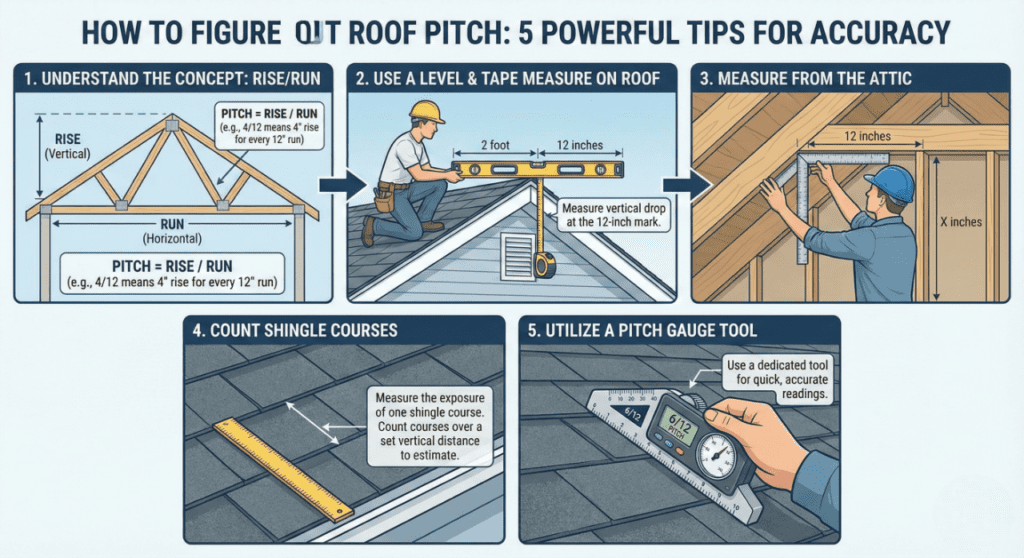
1. Use a Level and Tape Measure to Figure Out Roof Pitch (Fast & Reliable)
Many professional contractors rely on a manual method to figure out roof pitch using just a level and a tape measure, since it doesn’t require any specialized equipment and provides quick results while on-site.
- Use a 2ft or 4ft Level to Determine Roof Pitch. Calculate Roof Pitch Using a Level Tape Measure
- To begin measuring, place your 2ft or 4ft (or 2 inches longer than the length) level flat against the upper edge of the roof. Ensure the level is level in both dimensions.
- Using a tape measure, measure down vertically from the top edge of the roof surface to the bottom edge of the level (see illustration above). This measurement is referred to as the ‘rise’ for determining roof pitch.
- Next, measure the distance from the top edge of the level to the bottom edge of the level; this distance is referred to as the ‘run’ when determining roof pitch.
Because of its speed, accuracy, and ease of use, this well-established technique remains a widely used method for determining roof pitch for many contractors. Mastering the manual method will result in accurate, consistent roof pitch calculations.
2. Measure Roof Pitch From Inside the Attic
When you cannot go outside to measure roof pitch, measuring it from the inside of the roof (attic) is an excellent way to figure out roof pitch with little or no safety concerns about climbing ladders or walking on steep surfaces.
Steps to measure roof pitch from the attic:
- Place a level on the rafter and mark the point where the level meets the rafter.
- Measure 12 inches along the level.
- Measure straight down (vertically) from the marked point on the rafter to the marked point on the level.
The measurement you get will be your rise (vertical) over 12 inches (run). This will be your roof pitch. This method of measuring roof pitch is especially useful for measuring roof pitches that are very steep and/or covered with snow or ice, as it allows you to safely measure the pitch of a roof without putting yourself in danger of outside hazards.
3. Use a Smartphone App or Digital Tool for Quick Pitch Identification
Roofing contractors of today typically turn to technology to quickly and accurately figure out roof pitch. Many rooftop software applications now feature smartphone-based sensors and various camera angles to provide immediate pitch calculations.
The following are some advantages of using roofing applications:
- Calculating pitches from the ground level is a safe method
- Digital pitch calculations are very accurate
- Installation estimates can be made more rapidly
- You can archive the pictures and pitch data in a report
These types of programs help eliminate any and all guesswork in the measurement of pitches for roofing jobs. By using this innovative approach to measuring roof pitch with technology, roofing contractors will decrease the amount of time spent on-site while improving their accuracy in pitch measurement.
4. Use a Roof Pitch Multiplier for Material Calculations
After figure out roof pitch, you’ll likely need to calculate the roof’s actual surface area—this is where a roof pitch multiplier is useful. A roof pitch multiplier is a conversion factor that changes the roof pitch into a standardized usable number for estimating the quantity of shingle bundles, the amount of underlayment required, or the amount of metal roofing materials needed.
Examples of roof pitch multiplier values are as follows:
- 4/12 pitch = 1.054,
- 6/12 pitch = 1.118,
- 9/12 pitch = 1.250.
By multiplying the footprint of the building (the horizontal area of the building) by the roof pitch multiplier, you can determine the total surface area of the roof. Professionals who regularly calculate roof pitch use this process to quickly and accurately create roof quotes and material estimates.
5. Use Aerial Reports to Figure Out Roof Pitch With 99% Accuracy
Roof measurement reports provided by professionals are becoming the method of choice for contractors to deliver precision and efficiency. Aerial and satellite measurement technology produce high level accuracy and allow you to figure out roof pitch without having to be on the roof to perform manual measurements.
Some of the benefits of using professional roof measurement reports are:
- The pitch is determined for all sections of the roof, and the pitch is highly accurate for every section.
- The measurement process does not require a person to physically touch the roof, which means less risk and injury.
- All of the pitch diagrams on which the measurement reports are based will be given to the contractor in a digital report.
- With the ability to obtain professional roof measurement reports quickly, contractors can complete their estimates, bids, and insurance documentation quickly and efficiently.
Contractors who perform large numbers of roofing projects frequently rely on the services of professional roof measurement companies because they provide the most accurate and efficient way to determine roof pitch.
Understanding Roof Pitch Ratios and Why They Matter
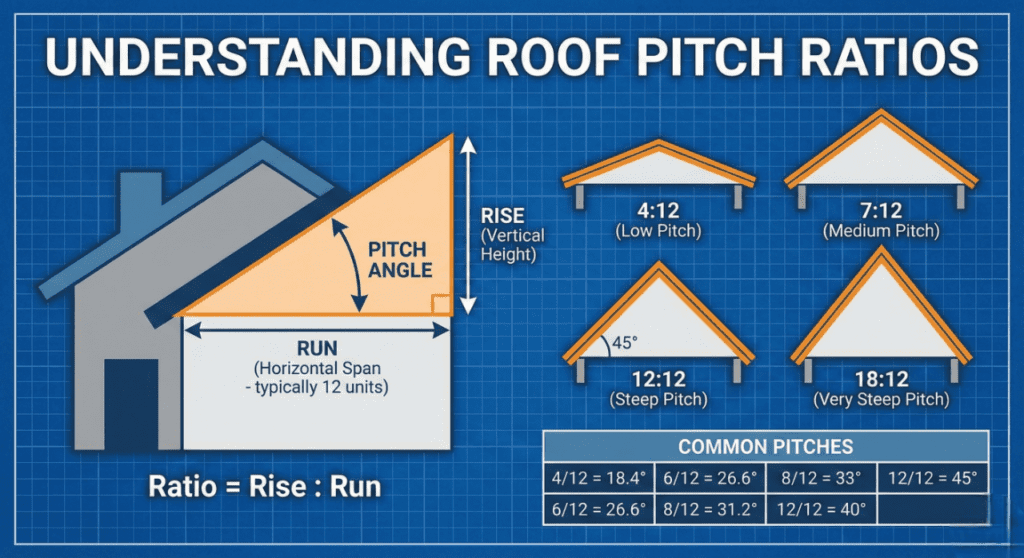
Roof pitch is measured as a ratio, such as 4/12, 6/12 or 12/12. The first number in the ratio indicates how many inches the roof rises vertically for every twelve inches of horizontal run. When you accurately figure out roof pitch, you gain information that is beneficial for many reasons, including:
- How to select materials that are compatible with your roof.
- The ventilation requirements for your roof.
- The amount of snow overload that your roof can carry and how well your roof performs structurally.
- The efficiency of water runoff from your roof.
- How difficult or easy is it to install your new roofing system.
Here are examples of these types of roofs:
- Low slope roofs (2/12 – 4/12) usually require the use of special low sloped roofing products, such as rolled roofing or membrane systems.
- Medium slope roofs (5/12 – 8/12) work best with asphalt shingle roofing products.
- Steep slope roofs (9/12 or greater) generally require additional labour and special equipment to install correctly.
By knowing how to accurately calculate your roof pitch, you will lessen the chances of making costly mistakes during your roofing installation, as well as improving the overall performance of the roof system.
Common Mistakes to Avoid When Figuring Out Roof Pitch
Even experienced roof builders will make mistakes figure out roof pitch. Here are some of the most common mistakes.
- Measure on a level, flat surface. A level, smooth roof surface is vital for accurate roof pitch measurements.
- Use a straight measurement level. An uneven or slanted level will cause your perceived roof pitch to be less than accurate.
- Do not measure a wet (or slippery) roofing material; do not chance falling from the roof or allow for the additional fall risk, simply measure the pitch of the roof from the attic area using either digital devices or the app.
- Double-check your calculations. Mistakes in calculating pitch can happen due to jumping so frequently from the roof to the ground. Always double-check your measurements to assure that the data you have regarding roof pitch is accurate.
Final Thoughts
Accurately figure out roof pitch is a must for roofing professionals and Homeowners looking for an accurate estimate and systems that perform exceptionally well. The five methods explained in this guide (manual measurement, attic measurement, digital software applications, map and aerial insurance) will allow you to establish pitch for any roof type. By learning to determine roof pitch with ease, you improve not only your precision but also your effectiveness, environmental safety, and overall success of the work you do.
For the most accurate pitch calculations—especially for professional jobs—use a satellite roof measurement report from: 👉 RoofMeasuring.com
FAQs
1. How do I figure out roof pitch quickly?
One method is to measure a section of horizontal run using a level and tape measure. Then use that measurement to find the vertical rise.
2. Can I measure roof pitch from inside the attic?
Yes, find a level, mark a 12″ section along the rafter, and then measure how many inches of rise there are from the rafter to the level.
3. What tools can I use to figure out roof pitch without climbing?
Use a Smartphone app or digital pitch meter. You can also hire someone to take an Aerial Roof Measurement Report for accurate results without climbing on a roof.
4. What is the most common roof pitch in the USA?
Residential roofs in the United States generally have a roof pitch between 4/12 and 6/12. This will create adequate runoff while minimizing the risk of injury due to compromised footing.
5. Why is roof pitch important?
Roof Pitch influences drainage, choice of roofing materials, difficulty of installation, expectations of performance from the roof.