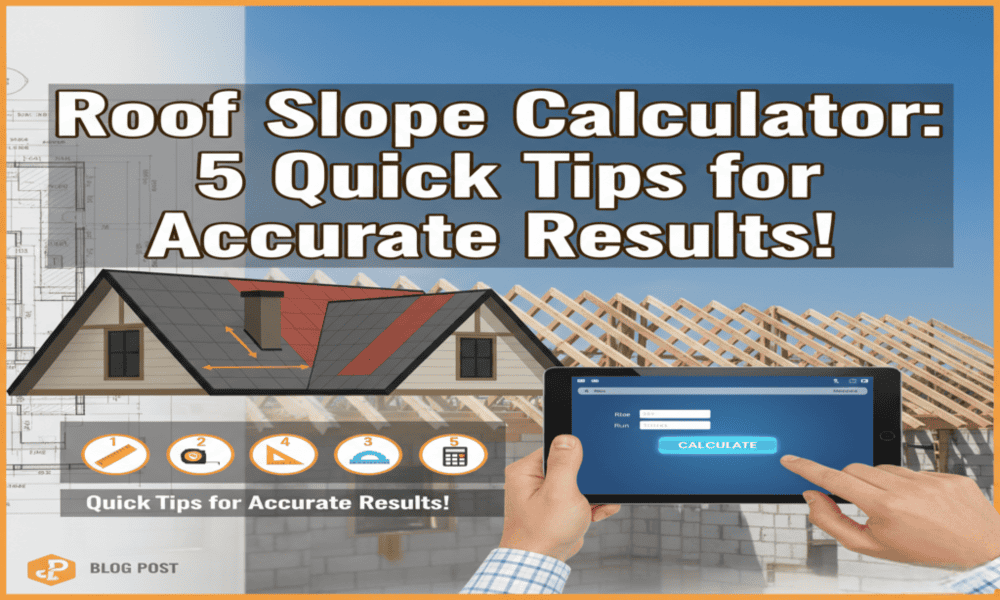
Having a good understanding of a roof’s slope is important for contractors, homeowners, and roofing contractors. The correct measurements will directly impact roofing material selection, drainage efficiency, structural integrity and overall project budgeting. While a roof slope calculator will help, it is a technique-based process that will provide you with precise results if you are mindful of details and do it properly. Here are five quick tips to help with working through accurate slope calculations for your roof, while ensuring the information is reliable.
Table of Contents
1. Measure the Roof Dimensions Accurately
The first step in determining an accurate roof slope calculator is to recognize that the foundation of an accurate calculation is taking accurate measurements. The first measurement is the rise (vertical height) and the second is the run (horizontal length) of the roof. You may use a measuring tape for short measurements or you may use a laser distance measurer for long measurements. Make sure that you are measuring from the edge of the roof as appropriate, and have accounted for overhangs, eaves, or irregular angles of the roof.
If you have a multi-level or irregular roof, ensure that you measure each section individually. Even one measurement that is incorrect will throw off the slope calculation (and therefore the material order and installation plans as well). Record all measurements accurately and label each value for the rise and run for each section.
2. Use a Trustworthy Roof Slope Calculator
After you have your measurements, enter them into a reliable roof slope calculator. These online calculators will not only calculate your roof slope but automatically convert your rise and run measurements into slope ratios or angles in degrees. It is best to choose a calculator that allows you to see both the ratio and angle measurements so you can compare the results.
For industry professionals, it’s best to find a calculator that will include some features like:
- Material recommendations based on slope
- Pitch classifications (low, medium, steep)
- Automatic conversion to different units (feet, inches, meters)
These advanced systems help limit human error, and will help ensure that your roof slope calculator will meet building industry standards.
3. Measure Roof Slope in Multiple Locations
One measurement may not accurately assess the entire roof system, particularly if you are measuring irregular roofs and roofs of an older construction. To confirm roofing angles, take slope readings in multiple locations across the roof system and evaluate the readings to identify differences, that could have resulted from settling, sagging, or construction methods.
For example, if you are evaluating a fairly large roof, you may find that the rises of the roof in adjacent sections differ slightly, which could impact drainage water flow and use of roof materials. Averaging the roof slope from multiple measurements will result in an overall better average and reliable roof slope.
4. Consider Roof Complexity and Design
Not all roofs are simple gable or hip roofs. With modern architecture sometimes include dormers, valleys, and intersecting planes. If needed to determine the roof slope calculator with such elements, divide the roof geometry into individual planes and measure the slope of one plane at a time in a slope calculator, allowing each plane to be calculated individually producing precise answers for complex geometries.
We also highly recommend considering how roof overhang, eaves, and parapets can affect the overall slope if present. If ignored, the slope could ultimately be less or more than necessary, and this would affect overall material ordering and labor costs.
5.Verify Results with Manual Calculations
Despite using a sophisticated calculator, using manual calculations to verify your results adds a layer of assurance for accuracy, regardless of the ease of use of your calculator at all. The common formula for roof slope is:
slope (in inches per foot) = rise run × 12
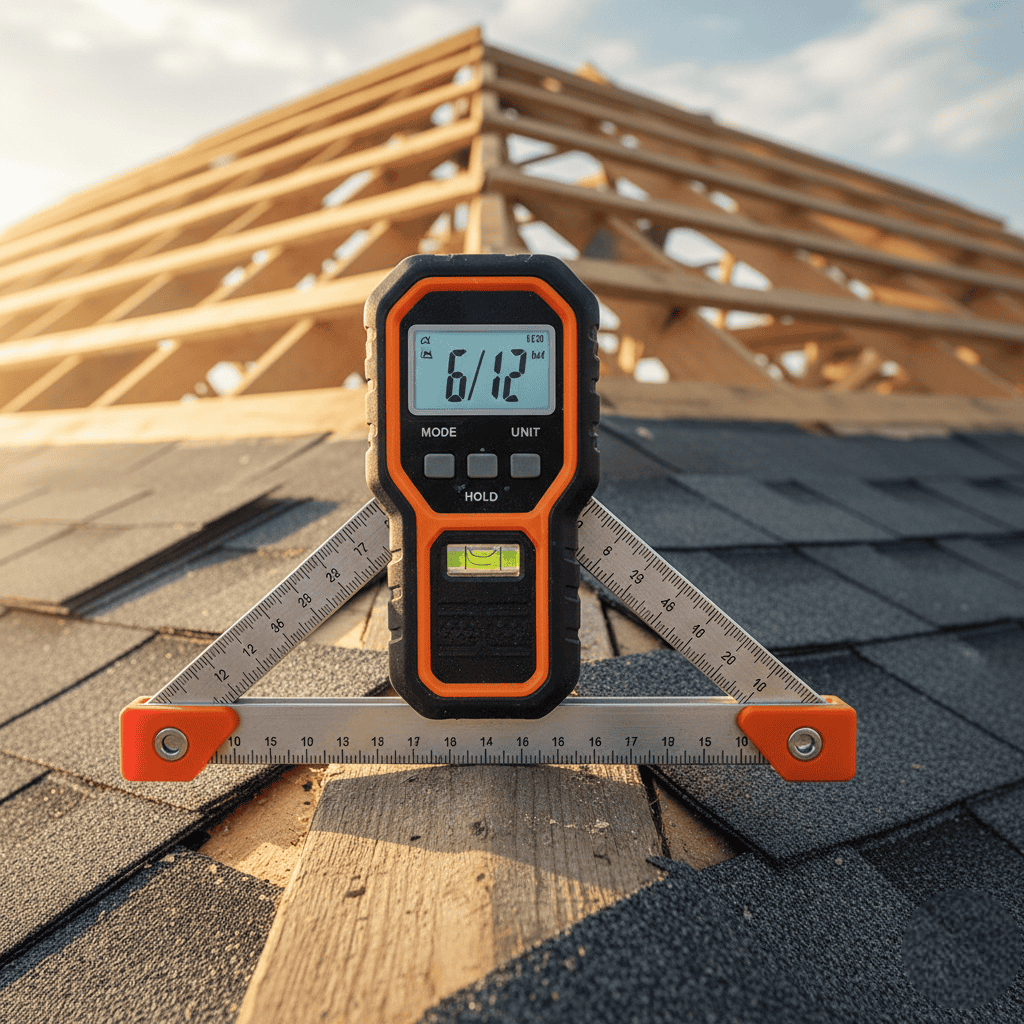
For example, a 6 foot rise with a 12 foot run yields a 6:12 roof slope, which can be ironically presented with a degree angle of 26.57°. Checking the answer you got with the roof slope calculator represents less risk of being wrong, or not having enough confidence in your own measurements.
Further Considerations Regarding True Roof Slope Measurement
Use Appropriate Tools:-
- Digital inclinometer or pitch gauge
- Laser distance measurer
- Measuring tape
- Level and chalk line for horizontal reference
Higher-quality tools decrease the possibility of errors in your measurements. While enhancing efficiency.
Consider Implications of Roof Material
The slope of the roof determines the materials to use:
- For low-slope roofs (≤3:12): Use waterproof membranes and whether the materials are likely to pool water.
- For moderate-slope roofs (4:12 to 7:12): They may use standard shingles metal panels or tiles.
- For steep-slope roofs (≥8:12): These require materials to resist sliding, but adequate water runoff may be offered.
Account for Local Building Codes
Many building codes outline minimum slope requirements and other constraints for specific roofing material systems. For example, asphalt shingles typically have a minimum slope of 2:12 and clay tiles may call for 4:12 or steeper. Due diligence with accurate roof slope calculator will help to keep your project on compliance and avoid costly corrections and penalties.
Document and Store Your Measurements
Maintain records of all slope calculations for future maintenance, renovation, or insurance purposes that include:
- Detailed measurements
- Calculated slopes in ratio and degrees
- Photos of the sections of the roof
- Notes on any inconsistencies or special considerations
Conclusion
Taking proper measurements of your roof slope calculator is crucial for every roofing project, whether that’s a matter of installing, maintaining, or repairing. With a few straightforward steps—measure your measurements carefully, treat the measurement slope like running a dependable calculator, measure more than once, think about the complexity of the roof, and use your own hands to double check—you should have dependable results on every occasion. Add to this measuring consideration for the material that you are using, local codes, written measurements, and take safety into consideration to ensure you’re maximizing all measures of efficiency and accuracy.
With the steps above in mind, roofing contractors, and homeowners can feel comfortable in their roof slope calculations, be sure they are using the materials appropriately, and avoid serious costly mistakes. This singular step is important not only for the roof, but also the roof will have an impact on the life cycle and performance of the entire home.
FAQs About Roof Slope Calculator
1. What is the purpose of a roof slope calculator?
A roof slope calculator allows you to determine the angle or steepness of a roof from its rise (vertical height) to its run (horizontal length). By determining this measurement, you will have an accurate measure in slope ratio (like 6:12) or degrees, which is needed to select materials and create proper drainage.
2. What is the best way to measure the slope of my roof?
In order to measure correctly, you would use a measuring tape or laser distance measurement tool, to determine the rise and run of your roof. From there, you can then use those numbers and insert them into a roof slope calculator for the exact pitch or angle of the roof. Again, you may want to take multiple measurements to be more accurate, and measure from different points of your roof.
3. What is the difference between roof pitch and roof slope?
While these terms are very similar, slope generally expresses the rise over run (example is 4:12 slope) and pitch expresses the same rise over run as a fraction or degree. In general, they both would express a steepness of the roof.
4. Is it possible to use a roof slope calculator for unusually shaped roofs?
Certainly. A roof slope calculator can be used on all roof types, gable, hip roofs, and even multi-level roofs. For detailed designs, measure each roof section separately, and then calculate each roof section’s slope separately to gain the proper accuracy.
5. What is the benefit of knowing the roof slope in roofing projects?
Knowing the roof slope helps in finding proper materials, better drainage, and building codes, and helps with estimating project costs. Calculating the slope accurately will make sure your roof has the proper performance of each roof type while coming in contact with different weather.